
2026-07-24
Coffee and Health: What the Science Says
Long tagged as 'unhealthy', coffee has moved to a very different place in the last twenty years of scientific research. So what does science say about coffee today?
The same Arabica variety, passing through different hands, ends up as completely different cups. Seven main factors shape coffee's aroma between the tree and your cup.
Coffee Science
The same Arabica variety, passing through different hands, ends up as completely different cups. Seven main factors shape coffee's aroma between the tree and your cup.
Coffee is an extraordinarily complex agricultural product. The same variety grown in different conditions or processed by different methods can taste completely different. For a barista, 'good coffee' takes both luck and discipline; but what we call luck is really the right meeting of seven controllable factors. Here are the main influences on the character of your coffee.
Altitude — Perhaps the single most decisive factor. Coffees grown at high altitudes (1500+ metres) ripen more slowly. That slowness lets the bean accumulate denser sugars and aromatic compounds. Labels like 'Strictly Hard Bean' (SHB) or 'Strictly High Grown' (SHG) indicate these dense, high-grown beans. Lower-altitude coffees are generally softer and less characterful.
Climate and soil — Volcanic soils (Guatemala, Kenya, Ethiopia) are rich in minerals and give coffee a characteristic brightness. Rainfall, sunlight and shade all shape how the cherries ripen. Coffees grown under shade offer more complex aromatic profiles than those exposed directly to the sun.
Processing method — After the cherry is picked, the bean must be separated from the outer layers. This is done in three main ways: washed, natural and honey. Washed coffees are cleaner and more acidic; naturals are more fruity and sweet; honey lies somewhere in between. The same bean processed differently becomes a completely different coffee.
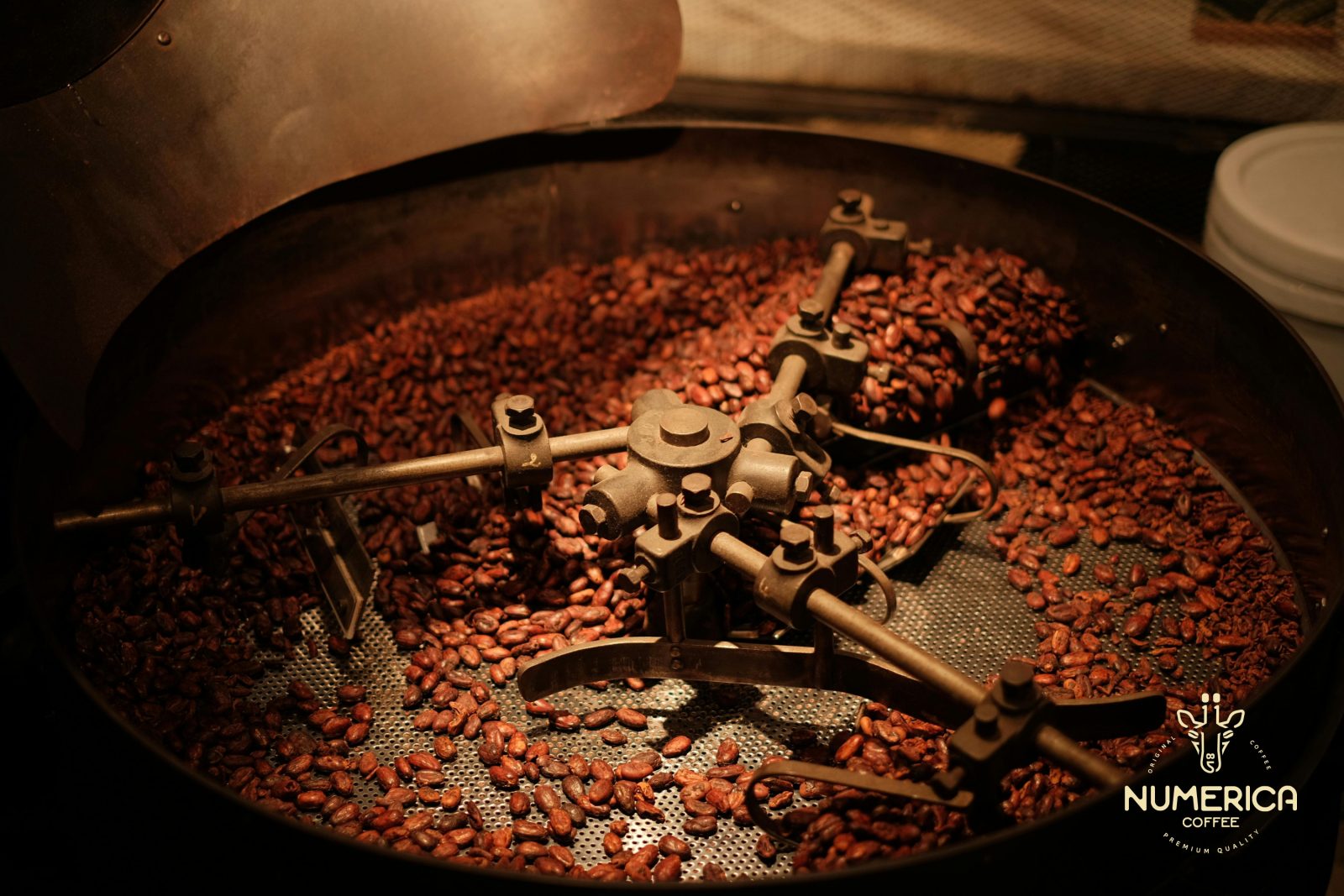
Roasting — Probably what the consumer notices most. A light roast keeps the bean's natural character; a dark roast brings out more of the roast itself. The art of roasting is not just 'how dark', but also 'over how long'. At Numerica every origin and blend has its own roast curve — recorded second by second.
Grind size and freshness — The same bean asks for a different brewing setup depending on grind coarseness. Very fine for espresso, very coarse for French press. Ground coffee goes stale 10-15 times faster than whole beans; grinding just before brewing is essential.
Water quality — 98% of your cup is water. Its mineral content, hardness and pH directly shape how the coffee extracts and how it tastes. Very soft water makes coffee taste flat; very hard water disrupts extraction. Ideal water is moderately hard — the Specialty Coffee Association's standards are a good reference here.
Brewing method — Same bean, same water, same grind — but whether it is prepared as espresso, filter, or cold brew changes the character of the cup completely. The method decides which side of the bean speaks.
Each of these seven factors shapes the coffee in your cup. At Numerica we work on every one of them to give you a consistent result.
Long tagged as 'unhealthy', coffee has moved to a very different place in the last twenty years of scientific research. So what does science say about coffee today?
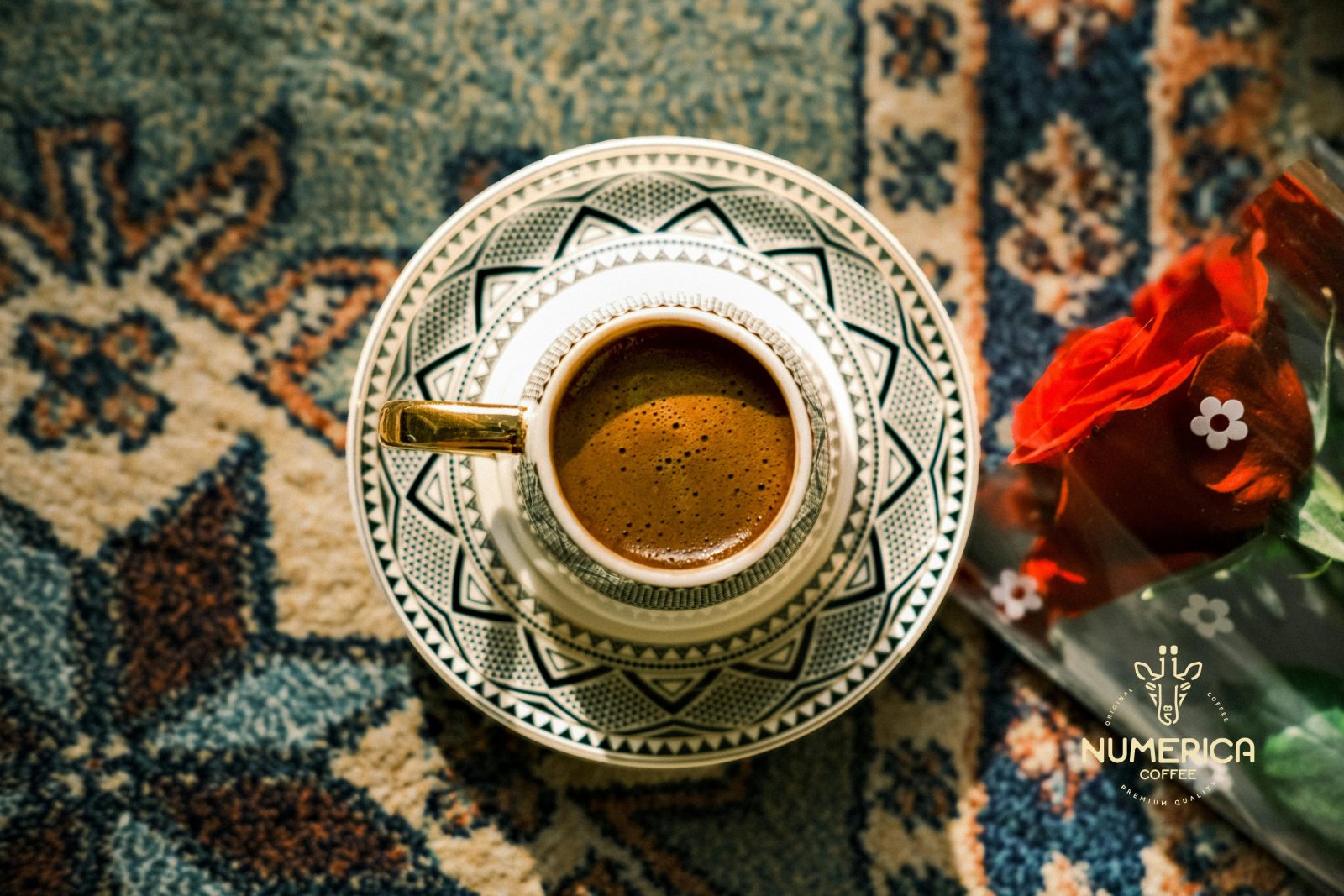
Put the same coffee bean into three different methods and you get three completely different drinks. Turkish coffee, espresso and filter — three worlds apart, three separate cultures.
If the world looks a little off-kilter when you wake up without your morning coffee, you're not alone. Millions of people beginning their day with coffee is no coincidence — the reason lives deep in both brain chemistry and the human spirit.
We use analytics cookies to see which pages are being read. Without your consent we measure only anonymously and without cookies. Privacy statement