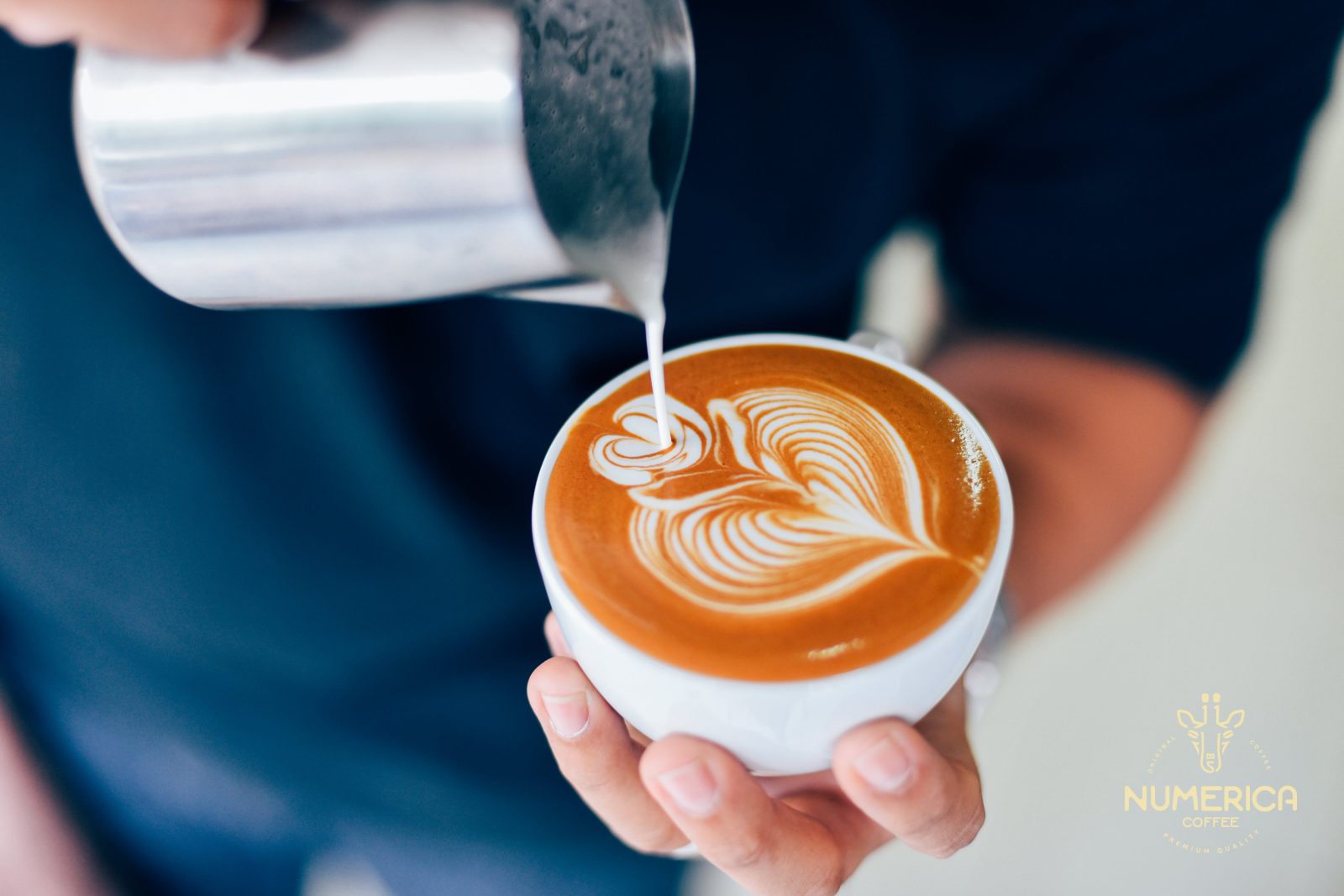
A Brief History of Coffee: From Ethiopia to Europe
The drink that is now a daily ritual for billions was, a thousand years ago, a red berry accidentally discovered by a shepherd in the mountains of Ethiopia. So how did it come to conquer the world?
Coffee History
A Brief History of Coffee: From Ethiopia to Europe
The drink that is now a daily ritual for billions was, a thousand years ago, a red berry accidentally discovered by a shepherd in the mountains of Ethiopia. So how did it come to conquer the world?
Legend has it that in the 9th century, a shepherd named Kaldi living in the Kaffa region of Ethiopia noticed his goats leaping about with unusual energy after eating red berries from a certain shrub. Intrigued, Kaldi brought the berries to a nearby monastery. At first the monks were suspicious, but when they found that the berries kept them awake during long evening prayers, they embraced this 'magical' bean. Thus began the first known cup of coffee.
By the 15th century coffee reached Yemen, where it began to be systematically cultivated for the first time. Sufi orders used it to stay awake during long nightly rituals. Yemeni traders took strict measures to prevent the bean from leaving the country — every bean sent abroad had to be boiled or roasted so it could not be planted elsewhere. But one day, an Indian pilgrim named Baba Budan left Yemen with seven fresh beans hidden in his beard and planted the first coffee gardens in India. Coffee was now free.
In the 16th century, coffee reached Istanbul and ignited an entirely different kind of cultural explosion in the Ottoman Empire. The first coffeehouses, opened during the reign of Suleiman the Magnificent, quickly became the centre of the city's intellectual life — they were even called 'mekteb-i irfan', meaning 'schools of wisdom'. Poets, scholars, merchants and ordinary citizens gathered in these coffeehouses to debate, play chess and share gossip. The state grew so uneasy about this potential space of dissent that at times it even tried to ban them — but the public's love of coffee outlasted every prohibition.
In the 17th century, coffee reached Europe by way of Venice. Some Catholic clerics denounced this 'Turkish drink' as the work of the devil, but Pope Clement VIII tasted it and loved it enough to formally bless it. And so coffee became a European drink too. The coffeehouses that opened in London, Paris, Vienna and Amsterdam became stages for intellectual revolution — many of the ideas of the Enlightenment were probably discussed over a cup of coffee.
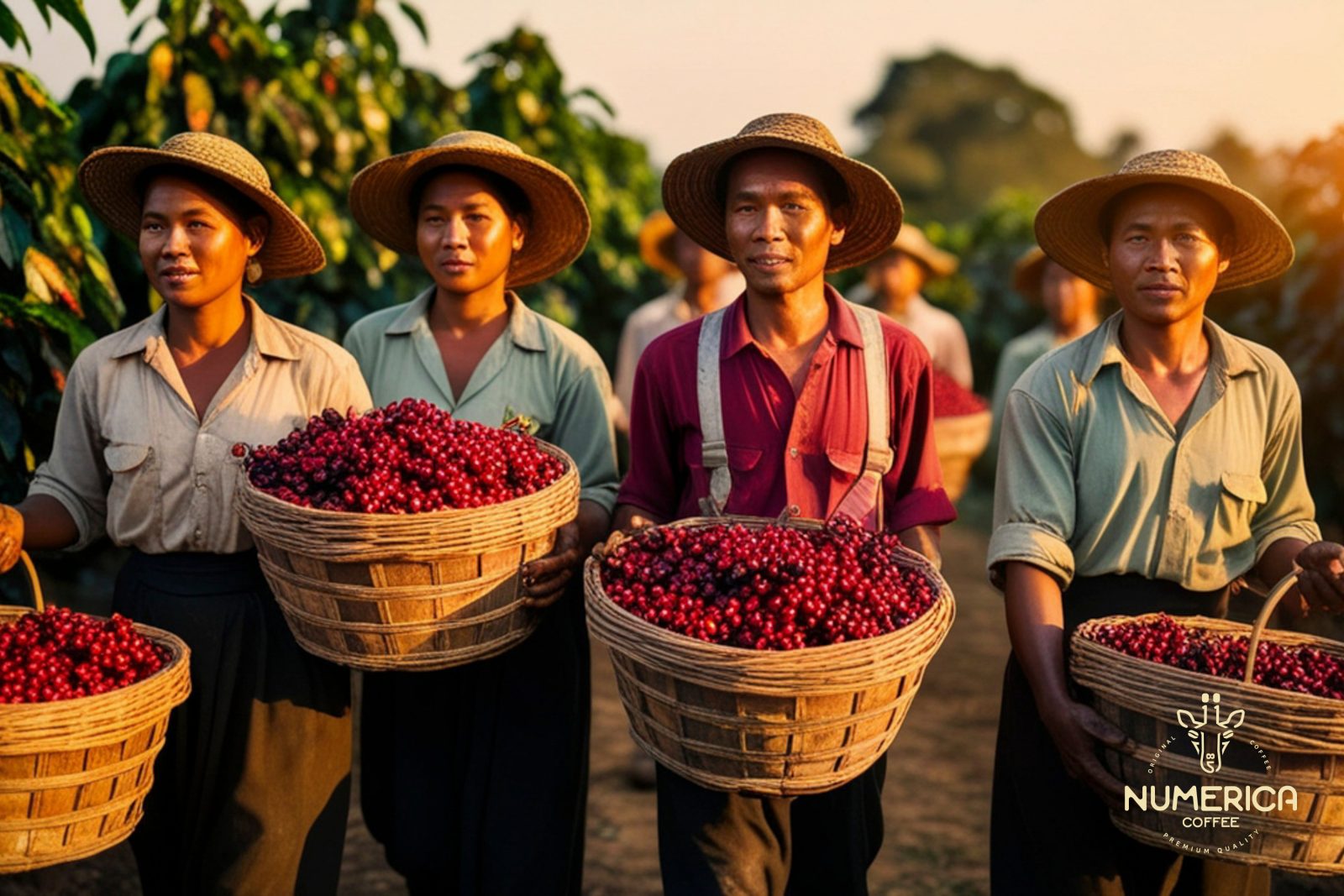
In the 20th century, Italy invented the espresso, America the filter coffee, and Vienna a coffeehouse culture all its own. Today, the third-wave coffee movement is rekindling attention to where the bean comes from, whose hands harvested it, and how it was processed. What began with Kaldi's goats a thousand years ago has become a global art form.
At Numerica we are one small part of that thousand-year journey. Every bean we roast comes from Ethiopia, Kenya, Colombia, Guatemala — the lands where coffee was born. And the path to your cup is, in a sense, the final line of a story a thousand years in the making.
The coffee in your cup is the end of a long journey that began in one of the most distant corners of the world. At every step of that journey, it leaves an imprint on people, land and climate. So what does 'sustainable coffee' really mean?
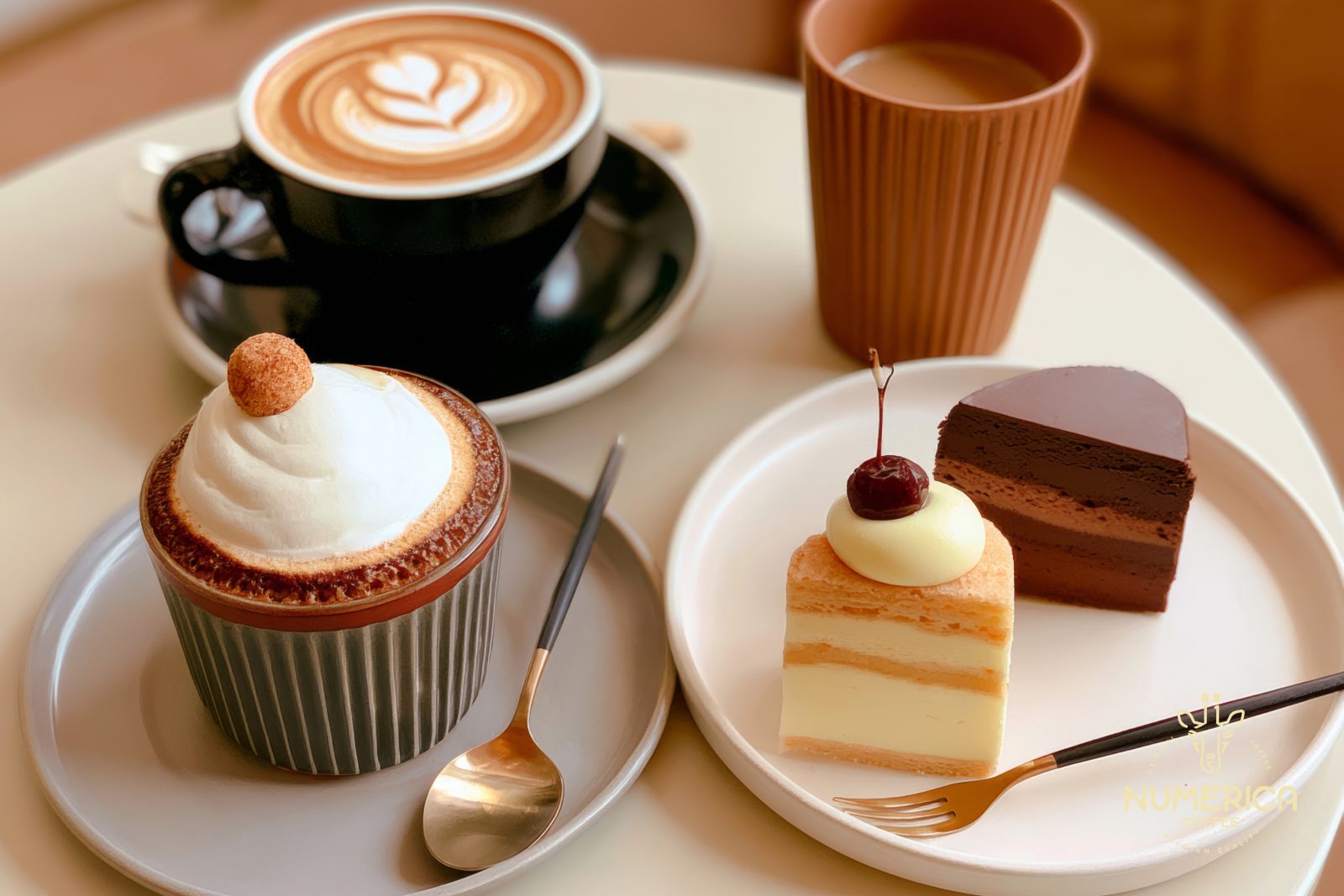
A good dessert next to a good coffee is a bit like mathematics: when the pair is right, the whole is far greater than the sum of its parts. Here are five desserts that dance beautifully with coffee.
You don't need to run a coffee shop to make professional coffee at home. The right equipment, the right knowledge and a little patience — that's all. Here are the five basic steps to becoming a home barista.